
Apr 12, 2026
Why Cold Water Pressure Washing Doesn't Remove Oil Stains (And What Does)
Why Cold Water Pressure Washing Doesn't Remove Oil Stains (And What Does)
You pressure washed your driveway last summer. The oil stain faded for about a week, then came right back. Or maybe it never really left in the first place, it just spread out into a lighter, bigger blotch. If that's you, you're not doing anything wrong. The equipment was wrong.
Most pressure washers for rent at the hardware store, and most of the rigs the cheaper services in Denver run, are cold water units. Cold water and oil don't mix. That's not marketing language, that's basic chemistry. And it's the reason your driveway still looks stained.
The chemistry: why oil and cold water don't mix
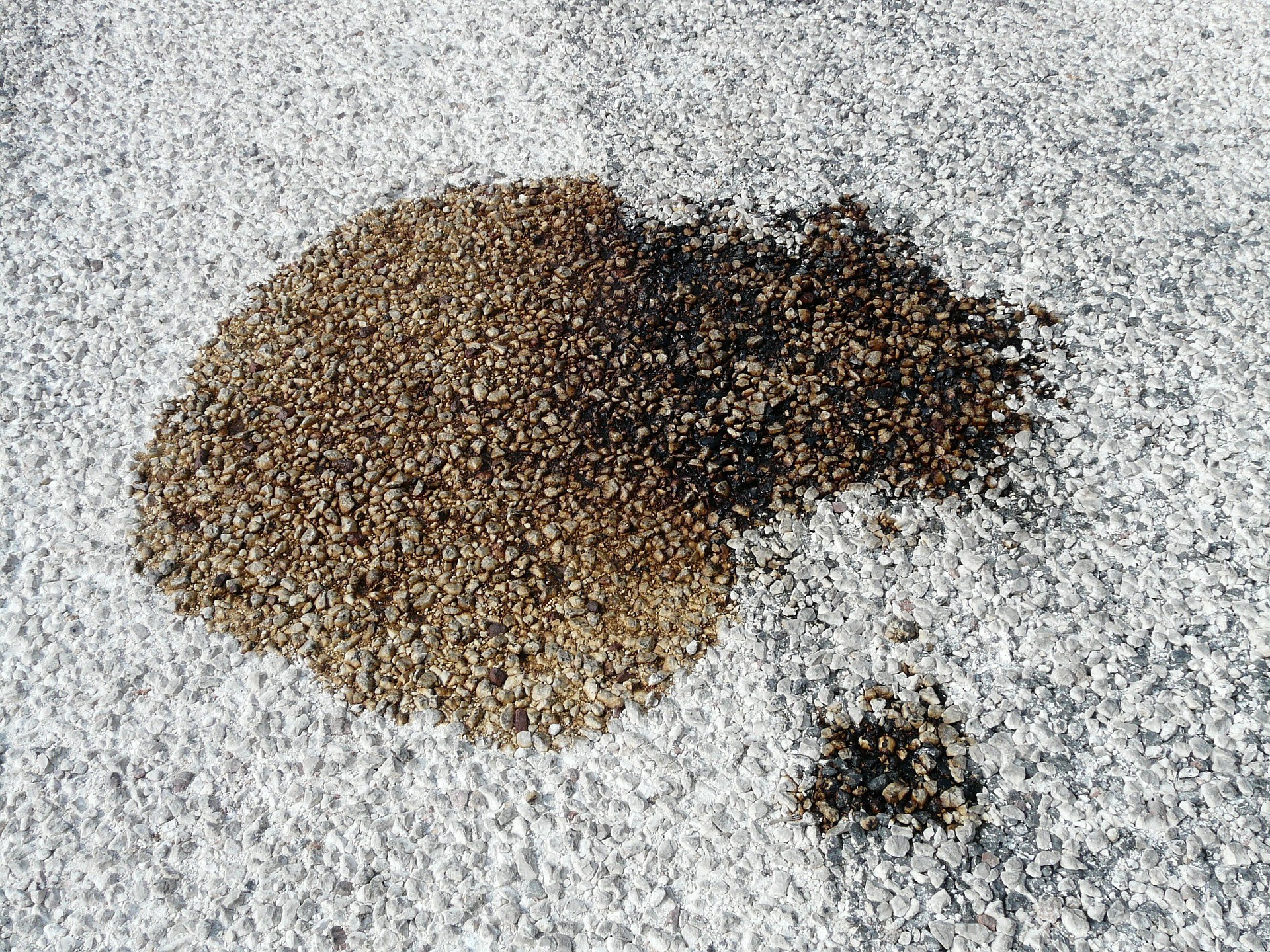
Petroleum molecules bind to the pores in concrete. Your driveway isn't a smooth surface under a microscope, it's a sponge of tiny pockets, and engine oil, transmission fluid, and brake fluid all sink into those pockets and stay there.
Cold water hits that oil and does one of two things: it beads up and rolls off, or it pushes the oil sideways, spreading the stain into a larger, lighter version of itself. The oil doesn't go anywhere. It just redistributes.
Hot water works differently. At 180 to 200 degrees Fahrenheit, water dissolves petroleum. Think about washing a greasy pan with cold water versus hot water. Cold water smears the grease around, hot water cuts through it. Same principle, different scale.
What actually removes an oil stain from concrete
Hot water at 180–200 °F to break the bond between oil and concrete
An alkaline degreaser applied during the hot wash to lift what's been loosened
Dwell time, so the chemistry can work, followed by a hot rinse
A second pass on older, deeper stains
This is a three-step process, not a one-pass spray-and-go. The degreaser without the heat doesn't penetrate deep enough. The heat without the degreaser lifts surface oil but leaves the deeper saturation behind. You need both working together.
Why most Denver pressure washers can't do this
Fewer than one in five solo pressure washing operators in the Denver area runs a hot water rig. Hot water equipment costs three to four times what a cold water setup costs, and it requires a burner, a fuel system, and regular maintenance most operators don't want to deal with.
That's why you keep hearing the same story from neighbors: “I hired someone to pressure wash my driveway and the oil stains came back.” The service did the job they were equipped to do. They just weren't equipped to remove oil.
The Colorado concrete factor
Driveways in Morrison, Evergreen, Conifer, and the rest of the foothills take more abuse than metro-area driveways. High-altitude UV bakes oil deeper into the concrete. Freeze-thaw cycles open up surface pores every winter and close them again in spring, pulling contaminants further in each cycle. De-icing salt changes the concrete's surface chemistry and makes oil bond even harder.
What that means practically: an oil stain on a Conifer driveway that's been there two winters is a harder job than the same stain on a Denver driveway. Cold water doesn't have a chance. Hot water still has to work for it.
When a stain can't be fully removed
Some oil stains have been soaking into concrete for five, ten, even twenty years. We can almost always lighten those by 80 to 90 percent. Complete removal is rare once oil has been in the concrete that long; at that point the concrete itself is pigmented, and you're looking at a full resurfacing or sealing job to get it uniform.
We'll tell you honestly before we start what we think the result will look like. If it's an old, deep stain, you'll get a realistic expectation, not a sales pitch.
Our Property Protection Package
Every job we quote includes our Property Protection Package at no additional charge. That means pre-wetting landscaping and trees, covering electrical outlets and smart devices, taping keyholes, blocking nearby storm drains to meet Colorado stormwater compliance, using only biodegradable chemistry, and providing before-and-after photo documentation when you ask for it.
Frequently asked questions
Will hot water damage my concrete?
No. Concrete handles 200 °F without any issue. The freeze-thaw cycle your driveway goes through every winter is harder on it than our hot water is.
Can you remove rust stains too?
Yes, but rust is a different chemistry problem than oil. Different acid-based treatment. Tell us what you're dealing with and we'll quote it accordingly.
How long does oil stain removal take?
Most residential jobs run 30 minutes to two hours depending on the age and size of the stain.
Do I need to be home?
No. Text us a few photos and your address, we'll send you a same-day estimate, and you can leave the gate unlocked or arrange access. You don't need to take time off work.
What if the stain comes back?
It won't. Once petroleum is removed from concrete, it doesn't reappear. If it does, that means the stain wasn't fully removed the first time, and we'd come back and finish the job.
Should I seal the driveway after?
For high-traffic driveways that see daily vehicle use, yes, sealing after cleaning prevents new stains from soaking in and makes future cleaning easier. It's an optional add-on we can quote alongside the cleaning.
Get a free estimate
Text a few photos of your driveway and your address to (303) 335-0528, and we'll send you a same-day estimate without a site visit for most jobs. We serve Morrison, Evergreen, Conifer, Bailey, Pine, Indian Hills, Golden, Lakewood, Littleton, and the Denver metro area along the 285 corridor.
Back to all pressure washing services
Learn more about everything we clean—driveways, patios, decks, siding, commercial properties, and fleet washing on our main pressure washing page.